
Primitive Reflexes in Adults: How Reflex Integration Supports Regulation, Focus, and Healing
Understanding the Hidden Role of Reflex Patterns in Adult Function, Regulation, and Resilience
The Issue: When the Nervous System Is Still Working Too Hard

I started as a pediatric therapist, but many are surprised to learn I work with adults as well. Adults with unintegrated primitive reflexes, often stemming from trauma, chronic stress, or neurodivergence, can benefit from reflex integration for adults just as much as children.
Many adults move through life believing their challenges are simply part of who they are.
They describe themselves as anxious, easily overwhelmed, physically tense, unfocused, or fatigued. They may have learned to cope very well, but underneath that coping is often a nervous system that has never fully developed a stable foundation.
What is frequently missed is this:
primitive reflexes in adults do not disappear simply because we age.
If these early reflex patterns are not fully integrated, the nervous system continues to rely on them in inefficient ways, creating compensation patterns. Over time, this leads to a system that is working harder than it should to maintain stability, attention, posture, and emotional control.
For many adults, this shows up as a quiet but persistent sense that life takes more effort than it should.
Learn more about how this work begins in an ****
The Nervous System Mechanism: Reflexes as the Foundation for Regulation
Primitive reflexes are automatic movement patterns that develop in early life to help the brain and body connect. They are not meant to remain dominant. Instead, they mature into more complex patterns that support posture, coordination, and nervous system regulation.
When reflexes remain immature, the nervous system does not fully shift into efficient functioning. Instead, it continues to rely on protective, reactive patterns and compensations.
This matters because reflexes are not just about movement.
They directly influence:
The autonomic nervous system (fight, flight, freeze, rest)
Emotional regulation and stress tolerance
Sensory processing and filtering
Postural control and coordination
Cognitive efficiency and executive function
For example, an unintegrated Tendon Guard Reflex keeps the nervous system on high alert. The body is constantly scanning for threat, even when none is present. This is not a mindset issue—it is a physiological pattern.
Over time, the nervous system organizes around these patterns, building layers of compensation to maintain function.
If you’re new to this concept, explore how The Masgutova Method of Reflex Integration is Different
When Protection Becomes the Pattern: How Trauma, Injury, and Illness Reactivate Reflexes
Even when reflexes develop appropriately, the nervous system can return to these patterns later in life.
This is where many adults begin to notice changes they cannot explain.
They may have functioned well for years, and the after a period of stress, trauma, injury, or illness, they notice changes in regulation, movement, or cognition that do not fully resolve.
What is happening is not regression in the traditional sense.
It is reorganization around protection.
The nervous system is designed to prioritize safety above all else. When it perceives threat—whether physical, emotional, or physiological—it will access the fastest, most reliable patterns available. Reflexes are those patterns.
They are immediate.
They are automatic.
And they are deeply wired for survival.
Situations that commonly trigger this shift include:
Traumatic experiences (acute or chronic) that overwhelm the system
Physical injury, especially involving the head, spine, or joints
Neurological illness or systemic medical conditions
Prolonged stress that keeps the body in a state of activation
Significant life transitions that increase emotional load
In these moments, reflexes can re-emerge as a form of stabilization
For example:
The body may tighten globally to create a sense of control (a protective pattern often linked to early reflex activation)
The startle response may become heightened, increasing vigilance and reactivity
Movement may become more rigid or effortful as the system prioritizes stability over efficiency
This is the nervous system doing exactly what it is designed to do: protect and preserve function.
Once these reflex patterns are reactivated and used repeatedly, the nervous system begins to rely on them again. Over time, they shift from being a temporary response to becoming a primary strategy.
The body has learned to use the reflex as a solution, but it has not been guided back out of it. The nervous system does not automatically know how to return to more integrated patterns without specific input.
So even when the stressor has passed:

The body continues to brace
The system remains reactive
Regulation requires more effort
This is where adults feel stuck—not because they are failing, but because the nervous system has not been shown a more efficient pathway.
Reflex integration provides that pathway—helping the nervous system move from protection-driven patterns back into organized, adaptable function.
Real-World Example: Reflex Integration and Chronic Conditions
I once worked with someone diagnosed with Ehlers-Danlos Syndrome, along with POTS, TMJ, headaches, back pain, and significant sensory challenges.
As a mother of young children, daily life required far more effort than it should have.
After just a few sessions focused on reflex integration and nervous system regulation, she experienced three consecutive days without pain—something that had not happened in years.
By addressing reflex-driven tension patterns, her nervous system began to release protective responses that had become chronic.
Observable Signs of Retained Reflexes in Adults
Adults with retained or unintegrated reflexes often do not recognize the root cause of their experiences. Instead, they notice symptoms that seem unrelated.
You may see:
A constant sense of internal tension or inability to fully relax
Heightened anxiety, especially in unpredictable environments
Strong emotional reactions that feel disproportionate to the situation
Difficulty focusing, organizing, or completing tasks
Chronic fatigue despite adequate rest
Poor posture, frequent pain, or muscle tightness
Sensitivity to sound, light, or touch
Motion sensitivity or dizziness
A tendency to feel overwhelmed by everyday demands
There are also more subtle patterns that often go unnoticed:
Compensation patterns we are unaware of
Adults may rely on excessive muscle tension to stabilize their body, overthink to maintain control, or avoid certain environments without fully understanding why. These strategies work—but they come at a cost.
Emotional regulation difficulties we never understood
Many adults believe they are “too sensitive” or “not resilient enough,” when in reality their nervous system is operating from a heightened state of protection
These are not personality traits.
They are patterns of nervous system organization.
Why Primitive Reflexes Remain Active in Adults
Reflex patterns may remain or re-emerge due to:
Early developmental stress (prematurity, medical interventions, birth trauma)
Chronic stress or long-term dysregulation
Trauma (acute or complex)
Neurodivergence (ADHD, autism, learning differences)
Neurological illness or injury
When the nervous system is under stress, it prioritizes survival over integration.
Reflexes remain active because they are helping the body cope—but they are not efficient long-term. They are protective, but they are also energy-consuming and limiting.
As adults, we often build highly sophisticated coping strategies on top of these patterns. We function, we achieve, and we adapt. But underneath, the nervous system may still be operating from a foundation that is not fully stable.
Who Benefits from Reflex Integration for Adults
Reflex integration therapy for adults can support a wide range of needs. Many adults experience significant shifts when the nervous system is given the opportunity to reorganize at a foundational level.

Adults who often benefit include:
Individuals with high anxiety or chronic stress—especially those who feel stuck in a constant “on” state
Trauma survivors seeking deeper nervous system regulation beyond cognitive approaches
Neurodivergent adults (ADHD, autism, learning differences) looking to improve focus, processing, and regulation
Adults experiencing motor or coordination challenges, including those with neurological conditions such as Parkinson’s disease, Multiple Sclerosis (MS), or post-stroke changes
Individuals with sensory processing differences—sensitivity to light, sound, touch, or movement
Adults experiencing brain fog, reduced processing speed, or executive function challenges
While not a cure for degenerative conditions, reflex integration can support neural efficiency, coordination, and ongoing nervous system engagement.
Key Benefits of Reflex Integration
When reflex patterns begin to organize and mature, the nervous system shifts from a state of compensation to a state of efficiency.
This creates meaningful changes across multiple areas of life
Improved emotional regulation and reduced reactivity
The nervous system is less reactive and more capable of adapting to stress. Individuals often describe feeling calmer without needing to “try” to be calm.Improved focus and cognitive clarity
With less energy directed toward maintaining stability, more capacity becomes available for attention, memory, and problem-solving.Better motor control and physical ease
Posture improves, movement becomes more fluid, and the body requires less effort to maintain alignment.Reduced physical pain and tension
As compensation patterns decrease, muscle tension and strain often lessen, leading to less chronic discomfort.
These changes happen because the system is no longer relying on compensation—it is operating from a stronger foundation.
First Hand Experience of a Client
“Fight or flight? My go to is flight. I didn't realize how my reflexes affected my social interactions. I was surprised when she knew exactly how I fall when I trip…
Misti worked with me to integrate the reflexes I had since I was very young and re-patterned my reflexes so I had a more stable, balanced footing and I felt more grounded. I not only got results with the Masgutova Method but I learned a lot about my body and became more self aware.
I am in my 60’ss—it’s not too late to discover how your body is meant to move.”
What Reflex Integration Treatment Looks Like
Treatment focuses on helping the nervous system move out of protection and into organization. One of the most important aspects of this work is that it is both structured and gentle. The goal is not to force change, but to guide the nervous system toward more organized patterns.
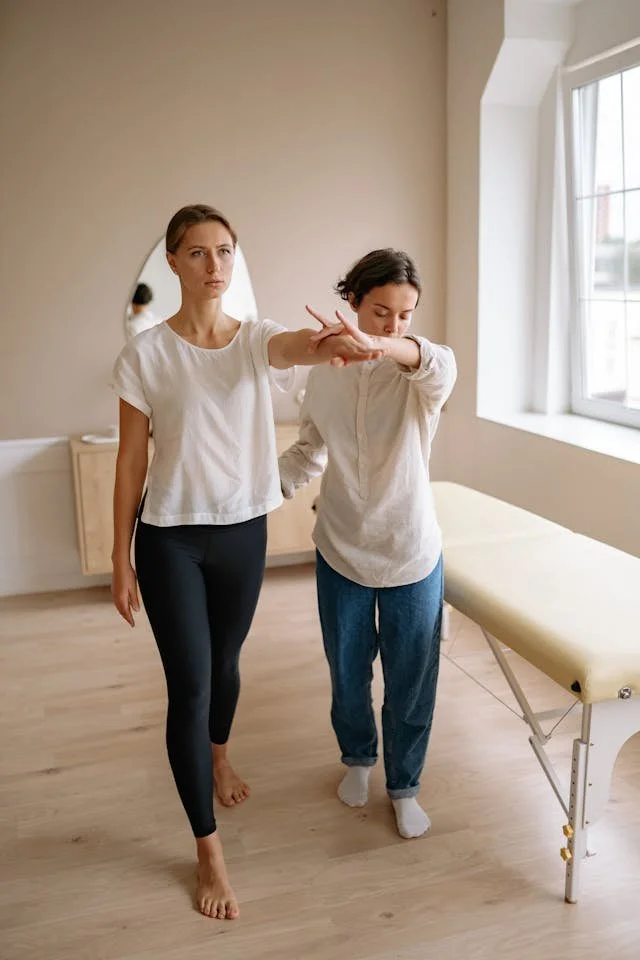
The Masgutova Method uses techniques to allow the Tendon Guard System to relax and let go of muscular tension. As one past client stated after a session “I feel like I’ve been restrung, like every muscle in my body was re-aligned”.
The Masgutova Method supports this through:
Gentle tactile input to create safety in the nervous system
Guided movement to repattern reflex pathways, guiding the brain to move the body with control
Home-based exercises to reinforce integration
Treatment typically includes:
In-person sessions
These sessions focus on identifying and addressing neurostructural limitations. Through specific, targeted input and guided movement, the nervous system is given new information to support integration. You also learn simple, effective movements to continue at home.
Intensive sessions
For those ready to move more deeply into this work, intensives provide several hours of focused intervention over a short period of time. This allows for more significant openings in the nervous system and can accelerate progress.
Virtual sessions
Virtual work allows for consistency and support. Sessions may include guided movement sequences, review of home programs, and adjustments based on how your nervous system is responding.
The work is gentle, structured, and deeply neurological.
Learn how an intensive session can start your path to growth.
A Different Way to Understand Anxiety, Focus, and Regulation
For many adults, this work provides a shift that goes beyond symptom reduction.
Instead of asking, “What is wrong with me?”
They begin to ask, “How is my nervous system organized?”
This shift changes everything.
Patterns that once felt confusing begin to make sense.
Reactions that felt automatic begin to soften.
Effort begins to decrease as the nervous system becomes more efficient.
Perhaps most importantly, it creates space for a different kind of self-understanding—one that is grounded not in limitation, but in possibility.
Learn More: Reflex Integration for Adults

If you are curious about how primitive reflexes in adults may be impacting your experience, an upcoming virtual information session on May 27th will explore:
Reflex development and adult function
The connection between reflexes and anxiety, stress and emotional regulation
How reflex integration works
How to know if this approach is right for you
This is a space to learn, ask questions, and begin to connect the pieces in a way that feels grounded and clear.
Reserve your spot here: May Lunch and Learn
Take the Next Step Toward Nervous System Regulation
If you recognize these patterns, your nervous system is asking for support—not pushing harder.
The nervous system is always communicating. It is always working to find stability, even when the strategies it uses are no longer serving you.
Change does not require starting over.
It requires building the foundation that may have been missed.
Through reflex integration for adults, it is possible to build a more stable, regulated foundation—one that supports ease, resilience, and clarity. Together, we can begin to understand how your nervous system is organized and create a path toward greater regulation, ease, and resilience
If you’re ready to begin, scheduling a session is the next step.
You are not stuck.
Your nervous system can change.
And with the right support, it can learn a new way forward.